


The Corrosion of Steel and Methods for Its Removal
Part I – Overview
Introduction
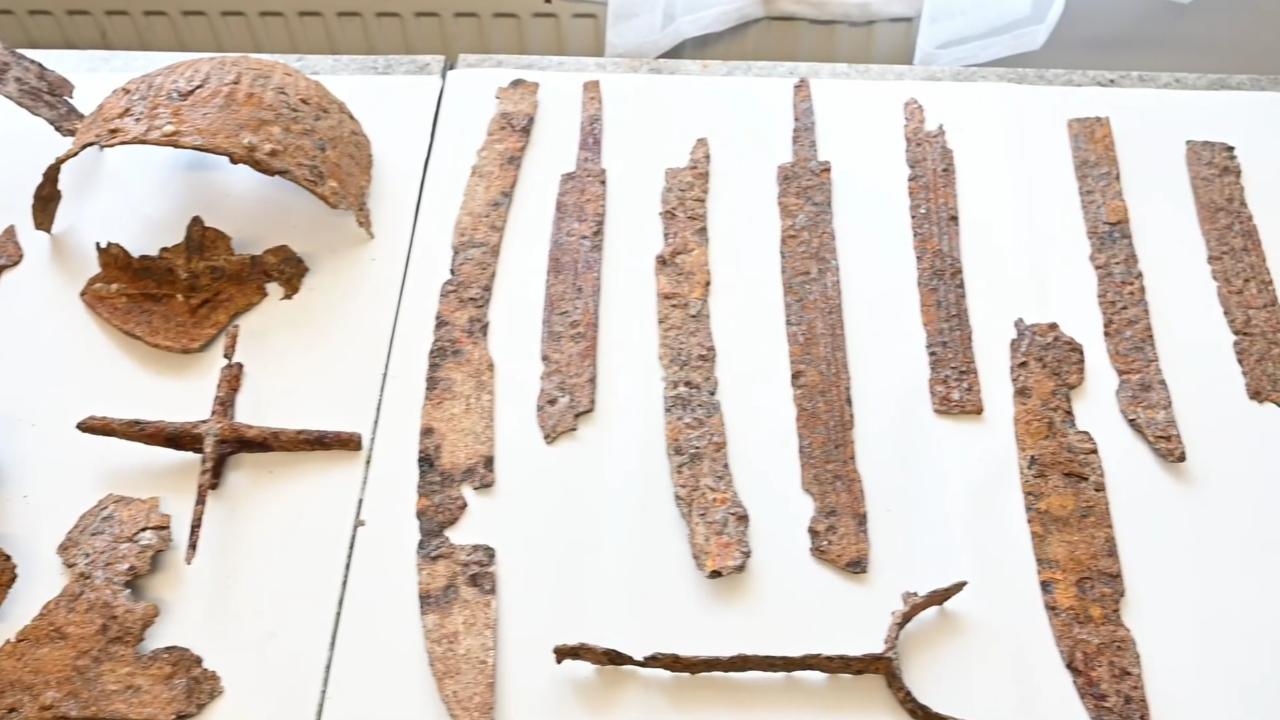
Rust, primarily composed of iron oxide, poses a significant threat to the preservation of metallic artifacts, particularly those made of iron and steel. In the fields of archaeology and museology, where artifacts are often exposed to various environmental conditions over centuries, rust can compromise structural integrity and aesthetic value. The removal of rust is a crucial aspect of artifact conservation, enabling the preservation of historical and cultural significance. This essay discusses the methods employed by museums and archaeologists for rust removal, emphasizing mechanical, chemical, electrochemical, and preventive techniques.
Fundamentals of Corrosion in Sword Steel
Definition and Mechanisms
Corrosion is defined as the gradual degradation of materials, typically metals, through chemical reactions with their environment. In the context of sword steel, which is primarily an alloy of iron and carbon, corrosion is predominantly driven by electrochemical reactions that occur in the presence of moisture and electrolytes.
Electrochemical Corrosion
The process of electrochemical corrosion involves several steps:
Oxidation: At the anode, iron (Fe) oxidizes and releases electrons. This reaction is represented by the following equation:

Reduction: At the cathode, a reducing agent such as oxygen (O₂) is reduced in the presence of water (H₂O), often resulting in the formation of hydroxide ions (OH⁻):

Formation of Corrosion Products: The generated iron ions (Fe²⁺) react with hydroxide ions and water to form iron(II) hydroxide, which can further oxidize to yield iron(III) oxide (rust):

Forms of Corrosion
The corrosion of sword steel can manifest in several forms:
- Uniform Corrosion: A uniform attack on the metal surface, commonly induced by acids or salts.
- Pitting Corrosion: Localized attacks leading to small pits or cavities in the surface.
- Intergranular Corrosion: Corrosion occurring along the grain boundaries, particularly in unalloyed steels.
- Stress Corrosion Cracking: Corrosion that occurs in areas experiencing tensile stresses, resulting in cracking.

Influencing Factors on Corrosion of Sword Steel
Environmental Factors
The rate of corrosion in sword steel is influenced by various environmental conditions, including:
- Moisture: Water is essential for electrochemical reactions, making humid environments particularly corrosive.
- Temperature: Elevated temperatures increase the corrosion rate by enhancing reaction kinetics.
- pH Level: A low pH (acidic) environment accelerates corrosion, while a high pH (alkaline) can inhibit it.
Electrochemical Reactions and Corrosion
The process of rusting is primarily electrochemical, involving oxidation and reduction reactions. In a low pH (acidic) environment, the following reactions occur:
- Oxidation of Iron: At the anode (the site where oxidation occurs), iron loses electrons and is oxidized to ferrous ions
- Reduction Reaction: At the cathode (the site where reduction occurs), hydrogen ions (H⁺) from the acid in the solution are readily available to accept electrons. This leads to the reduction of hydrogen ions to hydrogen gas (H₂) or, in some cases, can produce hydroxide ions

In a low pH environment, the abundance of H⁺ ions enhances the rate of the cathodic reaction, promoting faster rust formation.
Increased Conductivity
Acidic solutions typically have higher ionic conductivity due to the increased concentration of hydrogen ions and other electrolytes. Higher conductivity facilitates the movement of ions, which is crucial for the electrochemical reactions involved in corrosion. This enhanced ionic mobility increases the rates of both the anodic and cathodic reactions, leading to more rapid rust formation.
3. Corrosive Nature of Acids
Acids can react directly with iron, leading to additional corrosion mechanisms:
- Direct Reaction with Iron: Strong acids (like hydrochloric acid) can react directly with iron to form hydrogen gas and iron salts. This reaction not only removes iron but also contributes to the overall corrosion process:

- Formation of Soluble Iron Compounds: In acidic environments, iron ions may form soluble compounds, preventing the formation of protective oxide layers. This can expose more of the metal surface to further corrosion, facilitating a vicious cycle.
Disruption of Protective Layers
In neutral or alkaline environments, iron can develop a protective layer of iron oxide (passivation), which can inhibit further corrosion. However, in acidic conditions, this passivating layer can be disrupted or entirely dissolved, exposing fresh metal to corrosive elements and accelerating the rusting process.
Influence of Environmental Factors
Acidic conditions are often found in environments where moisture, pollutants (like sulfur dioxide or nitrogen oxides), and salts (like sodium chloride) are present. These factors can further exacerbate the rusting process:
- Pollutants: Many pollutants can lead to the formation of acidic solutions when they react with water in the atmosphere or on metal surfaces. This increases the overall acidity and promotes rusting.
- Salts: The presence of salts can lead to localized corrosion, especially in conjunction with acidic conditions, as they can create differential aeration cells on the metal surface.
Material Factors
- Alloy Composition: The presence of alloying elements (e.g., chromium, nickel) can significantly enhance corrosion resistance.
- Surface Finish: Rough surfaces are more susceptible to corrosion due to moisture accumulation.
Kinetic Factors
Kinetic aspects include the movement of ions and electrons, which are influenced by electric fields and temperature differentials.

Corrosion Removal Methods
Mechanical Methods
Mechanical rust removal methods are among the most traditional techniques used in the conservation of metallic artifacts. These methods involve physical abrasion and include techniques such as teh following.
Hand Tools
Hand tools such as wire brushes, scrapers, and files are often employed for rust removal. These tools allow conservators to precisely target areas of rust without damaging the underlying metal. This approach is particularly useful for intricate artifacts where detailed work is required.
Power Tools
In cases where rust is extensive, power tools like angle grinders and rotary sanders may be used. These tools provide a more aggressive form of rust removal and can efficiently clear large areas of corrosion. However, conservators must exercise caution to avoid removing too much of the original material or altering the artifact’s surface finish.
Sandblasting
Sandblasting or abrasive blasting is another mechanical method used to remove rust and corrosion from metal surfaces. This technique employs a high-pressure stream of abrasive materials (such as sand, glass beads, or aluminum oxide) to blast away rust. While effective, sandblasting must be performed carefully to avoid pitting or damaging the underlying metal, and it is generally used for sturdier artifacts.
Ultrasonic Cleaning
Ultrasonic cleaning involves immersing artifacts in a cleaning solution and applying high-frequency sound waves, which create tiny cavitation bubbles. These bubbles collapse and produce micro-jets of liquid that effectively remove rust and contaminants from the surface. This method is particularly advantageous for delicate items, as it minimizes mechanical stress on the artifact.
Understanding the principles of how materials interact, including scratching, is crucial in developing effective rust removal techniques. When dealing with rust, especially on metallic artifacts, the goal is to remove the rust without damaging the underlying metal. Here’s how the knowledge of material properties and scratching can be applied to rust removal:
Selecting Appropriate Tools and Techniques
Mechanical Methods
- Choosing the Right Abrasives:
- Hardness Considerations: Use abrasives that are harder than rust (iron oxide) but softer than the underlying metal. For example, using aluminum oxide sandpaper (harder than rust) on steel will effectively remove rust without scratching or damaging the steel.
- Various Grit Sizes: Start with coarser grit for heavy rust removal and gradually move to finer grits to minimize scratches on the metal surface.
- Using Hand Tools vs. Power Tools:
- Precision: Hand tools, like wire brushes or manual scrapers, can provide better control for delicate areas, minimizing the risk of scratching the base metal.
- Power Tools: When using power tools, such as grinders, it’s essential to use them at lower speeds and with appropriate attachments to avoid excessive scratching of the underlying metal.
Understanding Material Interactions
Frictional Forces
- Controlling Friction:
- When using mechanical methods, adjusting the pressure applied can influence the frictional forces at play. Excessive pressure can lead to unnecessary scratching of the base material. Use gentle pressure to avoid deep scratches while still effectively removing rust.
Wear Mechanisms
- Avoiding Abrasive Wear:
- While abrasives are effective, excessive wear can lead to the loss of material on the underlying metal. Understanding the principles of abrasive wear can guide the selection of abrasives and techniques that minimize damage to the metal.
Chemical Methods for Rust Removal
Utilizing pH Levels
- Acidic Solutions:
- Since rust removal can be accelerated in acidic environments, carefully selecting rust removal chemicals based on pH can enhance efficiency. However, understanding that acids can also corrode softer metals means that any chemical rust removal should be chosen based on the metal being treated.
Controlled Application
- Direct Application of Chemicals:
- Using brushes or sponges to apply rust removers can help target specific areas without allowing the solution to damage surrounding metal. This is analogous to controlling the interaction forces and avoiding excessive scratching.
Electrochemical Methods
Cathodic Protection and Electrolysis
- Minimizing Mechanical Interaction:
- Electrochemical methods reduce the need for mechanical abrasion, minimizing the risk of scratching the base metal. By using electrolysis to remove rust, you can achieve effective cleaning without physically altering the metal surface.
Chemical Methods
Chemical rust removal methods are widely used in conjunction with mechanical techniques to ensure thorough rust removal without damaging the artifact.
Acid Treatments
Acids, such as phosphoric acid and citric acid, are commonly employed to dissolve rust. Phosphoric acid converts iron oxide into iron phosphate, which can be easily scrubbed away, while citric acid can effectively remove lighter corrosion layers. Acid treatments must be carefully controlled to prevent damage to the metal beneath the rust, and they often require neutralization after use to stop the reaction.
Commercial Rust Removers
Various commercial rust removers are available that contain proprietary blends of acids and surfactants designed to break down rust. These products can be particularly effective, but conservators must evaluate their compatibility with specific metals and potential effects on any remaining patina.
Chelating Agents
Chelating agents such as EDTA (ethylene diamine tetraacetic acid) can be used to bind metal ions and facilitate rust removal. These agents are especially useful for removing rust in complex geometries where mechanical methods might be impractical. They work by dissolving rust without aggressive chemical reactions that could damage the artifact.
Electrochemical Methods
Electrochemical rust removal is an innovative technique that utilizes electrical current to facilitate the removal of rust while preserving the underlying metal.
Cathodic Protection
Cathodic protection involves immersing the rusted artifact in an electrolyte solution and connecting it to a power supply that generates a negative electrical charge on the artifact’s surface. This process effectively reverses the corrosion process by converting iron oxide back to metallic iron. Cathodic protection is particularly useful for larger or heavily rusted items, as it can treat multiple areas simultaneously.
Electrolytic Rust Removal
In electrolytic rust removal, the artifact is placed in an electrolyte solution, often containing sodium carbonate or baking soda, and a small electrical current is passed through the solution. The rust is removed as iron ions migrate toward the anode, leaving behind clean metal. This method is especially effective for artifacts that cannot withstand aggressive mechanical cleaning.

Preventive Measures
- Post-Cleaning Treatments:
- After rust removal, applying protective coatings (e.g., oils, waxes) can help seal the surface and prevent future corrosion. This is crucial since a scratched surface can be more susceptible to future rusting due to increased surface area exposure and potential for moisture accumulation.
Regular Maintenance
- Preventive Measures:
- Understanding the wear and scratching properties of materials can guide regular maintenance strategies. Using non-abrasive cleaning methods and protective coatings can help maintain the integrity of the metal surface and prevent rust from forming in the first place.
In addition to rust removal, museums and archaeologists employ preventive measures to protect artifacts from future corrosion.
Protective Coatings
After rust removal, conservators often apply protective coatings such as oils, waxes, or synthetic sealants to create a barrier between the metal and its environment. These coatings help inhibit moisture penetration and reduce the risk of rust formation.
Controlled Storage Conditions
Maintaining controlled environmental conditions is vital for preventing rust. Museums often store metal artifacts in climate-controlled environments with regulated humidity and temperature levels. Dehumidifiers may be employed to reduce moisture in storage areas, while desiccants can be used within display cases.
Regular Monitoring
Regular monitoring of artifacts is essential for early detection of corrosion. Conservators often conduct routine inspections to identify any signs of rust or degradation, allowing for timely intervention before extensive damage occurs.

Understanding Natural Patina and Rust
Before spotting fake aging, it is crucial to understand the characteristics of genuine rust and patina:
- Natural Patina: This is a protective layer that forms on metals over time due to oxidation and environmental exposure. It can present various colors, typically greenish or bluish hues on copper and bronze, and a darker brown or black coloration on iron and steel.
- Natural Rust: Formed through the oxidation of iron, rust typically appears as flaky, orange to red-brown deposits. Genuine rust accumulates unevenly and shows signs of wear consistent with age.
Visual Inspection Techniques
Color and Texture
- Uneven Distribution: Genuine rust or patina will not appear uniformly. Look for patches of color, with some areas exhibiting heavier rust and others having minimal oxidation.
- Color Variation: Authentic rust and patina often have multiple shades. Fresh rust can be bright orange, while older rust can darken and turn brown. Examine the colors closely; fake rust may use uniform paint or coatings.
- Surface Texture: Real rust tends to be flaky or powdery, while artificially created rust might appear smooth or overly polished. Use a fingernail to lightly scratch the surface; genuine rust should feel rough.
Patterns and Wear
- Corrosion Patterns: Look for natural corrosion patterns. Genuine rust can form around rivets, in crevices, and along edges, where moisture is more likely to accumulate. Artificial rust may not mimic these patterns accurately.
- Wear and Abrasion: Inspect areas that would typically experience wear from handling, such as the hilt, guard, or edges. Authentic blades often show wear and smoothness on high-contact areas, which might be absent in artificially aged pieces.
Physical Examination
Scratching and Scraping
- Surface Analysis: Gently scrape a non-visible area of the rusted surface with a soft metal tool or a plastic scraper.
Magnification
- Use of a Loupe or Microscope: Examine the blade under magnification. Authentic patina will have a complex structure, often revealing crystallization patterns, while fake rust may appear as a simple coating.

Case Studies
Case Study A: Corrosion in Historical Swords
An analysis of historical swords from various periods revealed that exposure to moisture and improper storage conditions significantly accelerated corrosion rates. In these cases, both mechanical and chemical removal techniques were employed, followed by thorough surface coating to ensure long-term protection against corrosion.
Case Study B: Restoration of Museum Artifacts
In a museum context, several steel artifacts showed signs of pitting corrosion. Detailed examinations indicated localized corrosion due to high humidity and lack of protective measures. Restoration efforts included meticulous mechanical cleaning followed by the application of corrosion inhibitors and protective coatings.

Conclusion
The corrosion of steel is a complex issue that presents numerous challenges for conservators and materials scientists. A comprehensive understanding of corrosion mechanisms and influencing factors allows for the development of effective removal and prevention methods. Mechanical, chemical, electrochemical, and coating techniques offer a diverse range of solutions for maintaining the integrity and value of swords. Ongoing research in this field is essential to develop innovative techniques for combating corrosion and maximizing the longevity of these culturally and historically significant artifacts.


Leave a Reply