


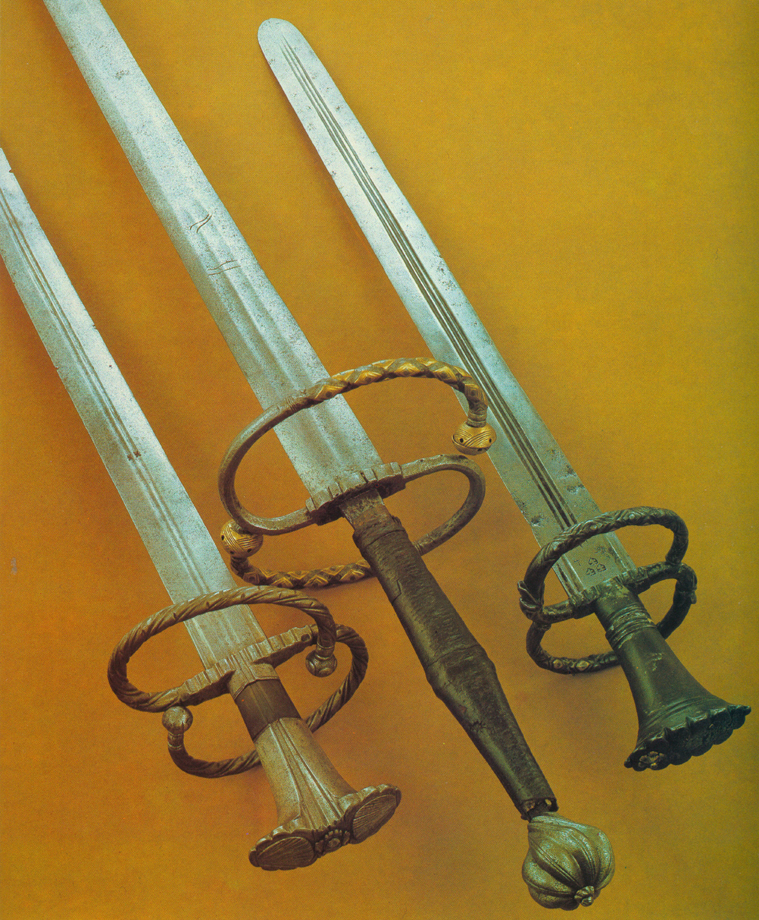
A little late in the month, but all the better: our Sword of the Month for August 2024 is none other than the well-known Katzbalger. Let yourself be whisked away to a world full of battlefield turmoil and colourful clothing, to an era between knightly values and efficiency in battle.
The Katzbalger sword is a significant weapon from the early Renaissance period, notable for its distinctive design and its association with the Holy Roman Empire and later also Swiss mercenaries known as the Landsknechts. This article examines the historical origins, design characteristics, tactical applications, and cultural significance of the Katzbalger, offering a comprehensive understanding of its role in early to mid 16th-century European warfare.

Historical Origins and Context
The Katzbalger sword first emerged in the early 16th century in the German-speaking regions of Europe, a period characterized by significant military developments. The name “Katzbalger” is thought to derive from the German words “Katze” (cat) and “balgen” (to brawl or scuffle), possibly referring to the close-quarter combat techniques for which this sword was designed. Alternatively, the name might reflect the quick, slashing movements associated with feline combat, which the sword’s design facilitated.
The Katzbalger is most closely associated with the Landsknechts, mercenary soldiers who served in various European armies, particularly within the Holy Roman Empire. These soldiers were known for their distinctive colourful dress, discipline, and effectiveness in battle. The Katzbalger served as a secondary weapon, complementing the primary armaments of the Landsknechts, such as pikes, halberds, and the Zweihänder.

Design and Construction
The Katzbalger sword is characterized by several distinct features that differentiate it from other contemporary weapons:

- Blade: The Katzbalger typically featured a short, straight blade measuring between 60 and 80 centimeters in length. The blade was broad and double-edged, designed primarily for cutting rather than thrusting. This design optimized the sword for slashing attacks in close-quarters combat, particularly effective against lightly armored opponents. The tip was often rounded. Nevertheless – two handed specimen existed.
- Guard: The most distinctive feature of the Katzbalger is its S-shaped or figure-eight-shaped crossguard. This guard served to protect the wielder’s hand and could also be used to catch and deflect an opponent’s blade. The guard’s shape contributed to the sword’s unique appearance and provided practical advantages in combat.
- Hilt and Grip: The hilt was typically constructed from wood or bone, often wrapped in leather to enhance the grip. Sometimes metals or stone occured. The design was intended for one-handed use, allowing the other hand to wield a secondary weapon or shield. The characteristic pommel, located at the end of the hilt, provided balance to the sword and could serve as a blunt weapon in close combat. It was always symmetrical – sometimes round and sometimes fish-tail-ish.

Tactical Use in Combat
The Katzbalger was primarily employed as a secondary weapon by the Landsknechts, who would draw it when the battle closed in and longer weapons became impractical. Its design was particularly well-suited to the dense, chaotic nature of Renaissance warfare.
- Close-Quarter Combat: The sword’s short blade allowed for effective maneuverability in confined spaces, where longer weapons were cumbersome. The broad blade was particularly effective for slashing and chopping , making it ideal for engagements against lightly armored foes.
- Defensive Capabilities: The crossguard’s design offered significant protection to the wielder’s hand and could be used to catch an opponent’s blade, potentially disarming them or providing an opportunity for a counterattack. The Katzbalger-hilt was one of the first swords of the late Medieval/ early Renaissance to evolve to a basket-hilt. Some sources see it as a predecessor to the Schiavona.

Cultural and Symbolic Significance
Beyond its practical utility, the Katzbalger also held cultural and symbolic significance, particularly among the Landsknechts. These mercenaries were known for their distinctive and often flamboyant appearance, and their weapons, including the Katzbalger, were a key part of their identity.
It is worth noting that the Katzbalger was not only carried by Landsknechts (like any weapon wasn´t used by just one type of unit) and that not all Landsknechts carried the Katzbalger. One iconographic example is shown below (by Albrecht Dürer in 1496) with a Landsknecht following a knight – the Landsknecht carries a classical straight-crossguard sword (probably a type of Messer).

- Landsknecht Identity: The Katzbalger was emblematic of the Landsknechts’ status as elite mercenaries. The sword’s distinctive design and the craftsmanship involved in its creation often reflected the wealth and prestige of its owner.
- Art and Literature: The Katzbalger is frequently depicted in period artwork, often alongside the Landsknechts in their characteristic garb. These depictions serve as valuable historical records, highlighting the sword’s significance as both a practical weapon and a cultural artifact.
- Ornamentation: Some Katzbalger swords were highly ornate, reflecting the status of their owners. Wealthier soldiers or officers often had swords with intricately decorated hilts, pommels, and scabbards, sometimes inlaid with precious metals or adorned with personal symbols. Even monarchs possesed richly decorated Katzbalger swords and dressed in Landsknecht fashion.

Evolution and Legacy
As firearms became more prevalent in the late 16th and 17th centuries, the use of swords like the Katzbalger began to decline. However, the influence of the Katzbalger persisted in several ways:
- Historical Reenactment and Collecting: The Katzbalger is a popular item among historical reenactors and collectors of Renaissance arms. Its unique design and historical significance make it a sought-after piece for those interested in the period.
- The Schiavona: Some sources see the Katzbalger with its first basket-hilt versions as the predecessor of the Italo-Croatian Schiavona.

Conclusion
The Katzbalger sword is a significant artifact of the Renaissance period, reflecting both the practical demands of warfare and the cultural identity of the soldiers who wielded it. Its distinctive design, optimized for close-quarter combat, and its cultural significance as a symbol of the Landsknechts make it one of the most notable swords of its time. Although the Katzbalger’s role in warfare diminished with the advent of firearms, its legacy endures as a symbol of the complex and dynamic nature of Renaissance military history.
Today the Katzbalger is a sought after sword on auctions, often reaching high prices. The interested collector however should be cautious when hunting for one of those since many blacksmiths produce this type of sword for Reenactors. After a few years usage on Reenactor-Events some of those replicas may have significant signs of wear and there are criminals who apply artificial patina and try to sell them as originals. Sadly, many auctions houses do not investigate deeply enough, which is a pity for collectors and history buffs.

Sources:
- Original specimen from Fischer Auktionen catalogues 2012-2015, except one specimen with orange grip which is from the Art Institute Chicago.
- Landsknecht images: https://bawue.museum-digital.de/search?q=landsknecht



Leave a Reply