


Foreword
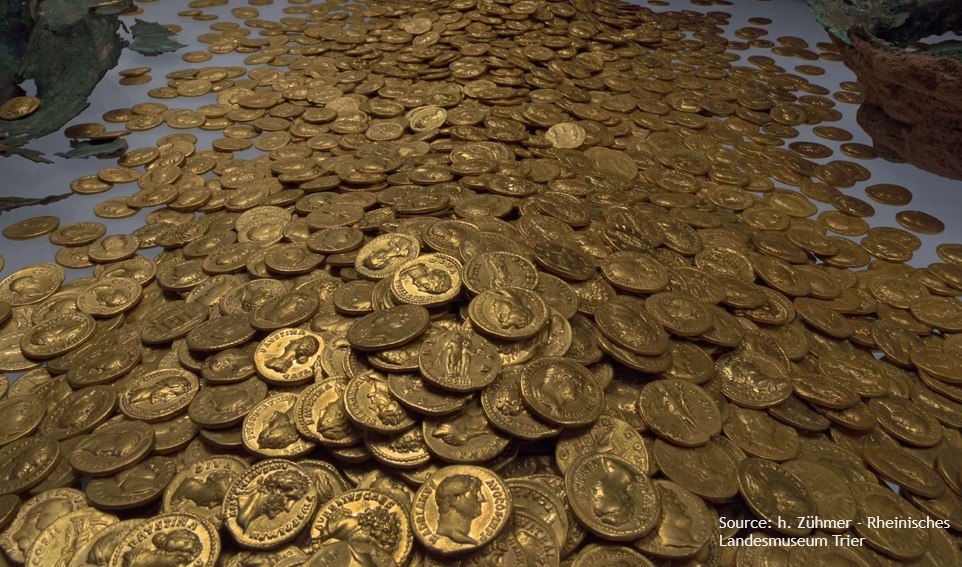
At one time or another, anyone who deals with historical weapons and armour in their everyday life will have asked themselves how much these objects might have cost at the time of their practical use.
Well, I have some good news and some bad news. The good news is that a relatively large number of entries on prices have been handed down to us by our ancestors in old records. The bad news is, on the one hand, that these prices no longer correspond at all to our basic economic realities today – you can convert a sword blade into the number of loaves of bread you could have bought back then and try to compare that with today’s ‘bread units’, but that fails because bread production is no longer equivalent either (logically, we need at least one constant in the equation) and, on the other hand, we would need to know the exact place and time to make a statement about how many blades and loaves of bread a person could buy at the same time with a unit of currency X at the time.
In the same way, an ounce of gold or silver is no longer comparable in proportion to its purchasing power: We cannot – as is often read in internet forums – count the coins of the time and multiply them by the mass of the precious metal in grams to determine today’s equivalent value. There are certainly direct comparisons in the files on everyday products (bread) or they are even described in new literature, but this data is obviously not to be found ad hoc.

Another difficulty is the use of the word ‘Grosz’ in Poland-Lithuania, one of two areas which we will investigate in this article: Until a certain point in time it was used to mean the so-called ‘Prague groschen’, at some point the Polish groschen – both differed, although they were relatively the same at the beginning (Casimir the Great copied the Prague groschen 1:1 at first).
That’s why I’ve been working with the data that I have available with relatively little effort, namely in my bookshelf, and would like to shed light on the prices from the mid-16th century to the end of the 17th century. The sources are, on the one hand, copies of old records of the Holy Roman Empire from the territory of Styria and the Polish-Lithuanian Republic.
There will certainly be scholars who know ways to convert very old currencies into our modern ones in a correct way, but as an amateur in the field I have to make do with what is available to me, namely some free time, my physical literature and the Internet. Due to lack of time and curiosity, I have resorted to the help of AI (ChatGPT) to convert the historical currencies into our current currencies. As was to be expected, the result is very vague and unsatisfactory. However, until I find a method that goes beyond comparing swords with loaves of bread from then and now, this AI should satisfy us here and now. Another method that is obviously worth considering is, of course, the material costs for the corresponding silver- or gold-covered currencies of the time. Without much thought, however, one quickly comes to the conclusion that an ounce of silver was worth much more back then than it is today.
The areas of the Polish-Lithuanian Republic and Styria discussed in this article give, I think, a very good overview of the most important production centres in Europe at the time. Styria supplied the entire Holy Roman Empire, while Poland-Lithuania extended eastwards and southwards to an area of 1,000,000 square kilometres, depending on the year. I think that this central Europe can certainly be used representatively, with the exception of peripheries such as islands or resource-poor regions. This calculation can certainly be made for Solingen, I am sure that there is much more material on Solingen. For Toledo and Genoa, too, people with the appropriate sources, intellect and knowledge of the language will be able to do something like this or have already done so.
The beauty of our example is the trade in sword types that somehow everyone finds very interesting, namely knightly swords, pallaszes, dussäggen, sabres and rapiers. These forms were used throughout Europe and were also brought overseas with colonisation.

A small but immensely important detail that I have noticed is that the products are sometimes labelled with the attribute ‘new’, I would allow myself to interpret this to mean that it was more common to sell used swords, possibly reconditioned, than new ones. Whether this was really the case, whether only the blades were new, must be the subject of further research.
I divide them according to the source I have used, i.e. first Austria/Styria (Schwert und Säbel aus der Steiermark: Ausstellung im Landesmuseum Joanneum 4. – 1975), then the Polish-Lithuanian Republic (Broń i Barwa: biuletyn Stowarzyszenia Przyjaciół Muzeum Wojska. 1939, V-VI). Please note that we are taking a long period of time into account here. We also encounter another serious problem, namely the nomenclature. All too often, the names for various edged weapons at that time differ from those we use today. I have deliberately left some names (products and places) untranslated or vague.
Currencies
Please note the above-mentioned problems with currencies. Usage of those currencies in specific regions does not mean those originated or were minted there.
Holy Roman Empire
Gulden: Around 1580 in the holy roman empire, a Gulden was approximately equivalent to 24 grams of silver.
Adjusting for Purchasing Power
Another method involves considering historical purchasing power. Economic analyses and historical price indices suggest that a Gulden in 1580 could represent a substantial amount, often comparable to a month’s wages for a worker or craftsman.
Given that an average monthly salary in Austria today is about 2,000 Euros, we could infer that the historical purchasing power of one Gulden might be in the same range.
Kreuzer in the year 1680: In the late 17th century, a Kreuzer was equivalent to approximately 1.7 grams of silver.
Adjusting for Purchasing Power
Another method is to consider the historical purchasing power. Economic analyses and historical price indices suggest that small denominations like the Kreuzer were used for everyday items, and thus their purchasing power was relatively high compared to their metal value.
For instance, a Kreuzer might have bought a loaf of bread or other basic necessities. If we assume the cost of such items today is around 2 Euros, this gives us a rough idea of the purchasing power.

Kreuzer around 1808: around 0,5 – 0,8 grams of silver.
Polish-Lithuanian Currencies
from “Siła nabywcza groszy, trojaków i szóstaków na przełomie XVI i XVII wieku” by Dariusz Marzęta (link here).
“Thus in Lublin:
- in 1597 a hen could be bought for 2 gr. and a quarter of an ox for 40-60 gr.
- In 1599-1603, a pot of butter cost between 90-160 gr.
- between 1599 and 1601 a mound of eggs (60 pieces) cost between 4 and 10 gr.
- around 1600 a hare cost 10 to 15 gr., a barrel of herring 180-320 gr., a barrel of beer 36-120 gr., a pot of beer approx. 3 gr., a pot of vodka 6-9 gr., a root of millet groats approx. 40 gr.
- in 1601 a teacher earned 220 gr. per quarter, a council scribe (town council) 240 gr. in the same period, a church organist 180 gr. and a night watchman 550 gr.
- In the years 1600-1606 a pair of ordinary shoes cost between 15 and 80 gr.
Pennies, trojaks and sixpences minted in Lublin were circulated throughout the Commonwealth. They were also readily accepted in Poland’s neighbouring countries. Let’s take a look at the prices of selected goods and services in other regions:
- in 1595-1596 a root of salt in Usti Solny cost 1650 gr. and a root of wheat in Wrocław cost about 28 gr.
- In 1597, one had to pay 24 gr. for a calf in Breslau.
…
According to Prof. Żabiński’s calculations, pennies minted during the reign of Sigismund III Vasa according to the ordinance of 1580 had a value of 1 trophy, trojaks had a value of 3 trophies, and sixpences had a value of 6. If we multiply these values by 10.50 (the value of a trophy for today), the result obtained will be the equivalent of pennies, trojaks and sixpences from the early years of the reign of Sigismund III Vasa calculated in today’s zlotys. Thus:
- a penny minted at the Lublin mint was worth 10.50 zlotys
- a trojak – 31.50 zlotys
- a sixpence – 63 zlotys”

Styria/Austria/HRR
Around the year 1580
Dusägge 1,5 Gulden
Hungarian Pallasz 2 Gulden
Zweihänder 6 Gulden
Around the year 1680
Old double edged blade with new Waloon hilt + scabbard 1 Gulden
Sabreblade from Weiz 27 Kreuzer
Year 1808
Grenadier Sabreblade with „M-Mark“ 48 Kreuzer (often confused with “Prima plana”)
Polish-Lithuanian Commonwealth
Gród Brzesko-Kujawski in the year 1555
Dusägge with scabbard 6 Grosze
Spiski (?) sword 10 Grosze
Passau sword 13 Grosze
Nicely hilted sword 12 Grosze
Sadecki sword 10 Grosze
Lancehead 2 Grosze
Gród Brzesko-Kujawski in the year 1565
Simple sword 4 Grosze additional 1 Grosz per scabbard
Simple shortsword 3 Grosze additional 1 Grosz per scabbard metal cap
Passau sword 15 Grosze additional good mouthpiece 13 Grosze
Speer holster 2 Grosze
Rapier 20 Grosze
Leczyc in the year 1565
Hilt of a longsword in old style + scabbard 6 Grosze
Dussack 5 Grosze
Gród Kowalski in the year 1621
Sword 26 Grosze + scabbard 15 Grosze
Sabre and scabbard 38 Grosze
First class sword, decorated and new (!) 2 Florin 15 Grosze
Slightly worse sword (than before) 2 Zloty
Decorated Koncerz of good quality 6 Zloty
Metal scabbard parts for longsword in old style 8 Grosze
Cossack-style metal parts for scabbard 3 Grosze
Gród Sieradzki in the year 1683
Battle-ready sabre 1 Kopa (Kopa = 60 pieces of something) 10 Grosze
Cross-hilted Koncerz 3-4 Zloty
Pallasz 3 – 5 Zloty
Sword 6 Zloty
Simple, straight sabre-blade 20 Grosze
Good Sabreblade 1 Zloty
Sword-blade 20 Grosze
Pallasz-blade 24 Grosze
Koncerz-blade 24 Grosze
Sword-blade 1 Zloty 6 Grosze
Persian carpet (for comparison how „cheap“ swords or „expensive“ carpets were) 20 Zloty = 20 Good Sabreblades!
Ottoman bow of best quality 24 Zloty
Prices for 1 Zentner (ca. 50 kg) Steel-sheet by origin, year 1683 in Poland
Wroclaw or Austria 18 Zloty
Kleck or Slaska 12 Zloty
Hungary 9 Zloty
Leather for swords, year 1683 in Poland
Good piece of leather for scabbard 20 Grosze
Average piece of leather for scabbard 15 Grosze

Conclusion
We inevitably conclude that without sources listing everyday objects from the same period and region, determining the true cost of a particular sword is exceedingly challenging. Our estimates rely on factors such as income or comparative analysis to speculate on historical prices. Difficulties arise from inconsistent nomenclature, the tendency of recorded data to favor the upper social classes, and the absence of clear supra-regional exchange rates for silver and gold. Nonetheless, we glean a sufficiently clear picture to form a rough understanding. This facet of historical inquiry is certainly intriguing enough to warrant further research. It is worth noting that while these findings were somewhat expected, science also entails re-evaluating the obvious.
Sources
- Schwert und Säbel aus der Steiermark: Ausstellung im Landesmuseum Joanneum 4. – 1975
- Broń i Barwa : biuletyn Stowarzyszenia Przyjaciół Muzeum Wojska. 1939, V-VI
- Siła nabywcza groszy, trojaków i szóstaków na przełomie XVI i XVII wieku – Dariusz Marzęta (Link)
- https://chatgpt.com/


You must be logged in to post a comment.