

An article by Patrick A. Skura, Germany
Poland, as a synonym for the various Polish state formations since the beginning of their existence, occupies a special place among the European nations when it comes to the historical development, production and preservation of edged weapons. In order to do this special case a little more justice, especially because direct translations from Polish are scarce, I would like to address this topic here, provide one or two references and shed light on common Polish viewpoints. It is not possible to present such historical aspects satisfactorily without at least marginally discussing defence weapons and troop types, which is why they also have their place.
Naturally, edged weapons are part of the martial nature of cultural groups that always require at least one opposing party in order to have a right to exist and were therefore the subject of critical scrutiny once they fell into the hands of that very opponent. The process entailed both the imitation and the destruction of these symbolic objects. Provided that a state exists in which certain traditions of ‘blank weapon culture’ exist and can develop, the enemy’s influence is more or less negligible. The situation is different, however, if the state and its blank weapon culture is compromised, or in the worst case, ceases to exist officially and independently. Then it becomes confusing and expensive for researchers, collectors and admirers of such blank weapon traditions.
This is precisely the case when it comes to Polish edged weapons.
In order to understand the Polish blank weapon tradition, one must inevitably also deal with the history of this country. This is not even remotely possible in a format such as this essay and should not be the aim. Instead, these facts are broken down to the bare essentials so that the interested reader is made aware of the sheer existence of certain facts and can search for them independently at will in further literature, if necessary using modern means of automated translation.
The Kingdom of Poland emerged around the year 1000 and was characterised by typical European feudal culture, including military equipment, until the High Middle Ages. We find identical swords and armour to those used in the rest of Central Europe, often made in Solingen or Passau, but also by Polish or religious orders. The mounted warriors mostly consisted of knights and their followers in heavy armour, armed with lances and swords or mounted crossbowmen, in the style of the time. Around the turn of the 15th and 16th centuries, an episode of increased hostile contacts with the Grand Duchy of Moscow and the Tatars began, with Ivan III as the main antagonist between 1492 and 1503.
B. Gembarzewski wrote about this in 1938:
‘This cavalry [note: the heavily armoured knight] lost its importance against a mobile enemy that did not abide by the rules of western chivalry, did not announce attacks and was itself vulnerable to surprise attacks, which was so painfully demonstrated in the defeat at Bukovina in 1497. Undoubtedly, these reasons led to the need to create a lighter cavalry armed with lances – spears – which were always very effective in Polish hands, especially against an enemy unarmed with such lances themselves, and with crooked sabres and light shields. Hungarian patterns were used. The name ‘Hussars’ first appears in the [Royal Polish] tax register around 1500 alongside Hungarian and possibly Serbian surnames, i.e. Racowie, as the Serbs were called in Poland at the time.’
The military adaptation to the warfare of, for example, the Tartars, but also the Ottomans and Muscovites, brought countries such as the Kingdom of Poland or, earlier still, Hungary into a position in which they were initially inferior in places to an opponent with a completely different martial culture, but later combined military-technical aspects of the Orient and Occident and were able to draw advantages from this. The most obvious example is the aforementioned transition of the Polish nobility’s cavalry away from the traditional, heavily armoured lance warrior. Like any organic development, this transformation did not take place within a few years but rather over at least a century and did not produce a copy of the light Hungarian-Serbian cavalry, but for the first time combined armour with the fast, reactive warfare of light cavalry. This is how the classic Polish hussars, the Hussaria, developed, which represent one of the two main branches in the genealogy of the hussars and passed on their actual legacy to the Uhlans from the second half of the 18th century, while the light Hungarian hussars as the second main branch slowly spread via Austria-Hungary to other nations and eventually became the ‘actual’ hussars in Poland and several other states.
Between the years 1500 and 1550, a form of sabre was dominant among the hussars which was borrowed strictly via Hungary from the Ottoman territories in Europe (see illustration). In addition to this form, swords, long knives as a counterpart to the Hungarian sabre and the first karabelas as a further development of the latter were most probably traditionally used. At this point, it should be noted that the development of the karabela sabre from European, especially Bohemian, long knives is the author’s opinion, based on comparisons with the oldest iconography and evidence from the Occident and Orient. The author is aware that the thesis of the oriental or Byzantine origin of the Karabala sabre has its die-hard supporters, but the evidence available to anyone interested currently speaks in favour of a European origin and the constant repetition of the assertion of an Ottoman or Iranian origin is unfortunately (sic!) by no means an indication or argument for the correctness of this assertion.
Worth mentioning here is the Ottoman counterpart from the 16th century, the Deli, about whom Francois Sansovino wrote in 1582 in the work entitled: ‘Historia Universale dell’ origine et imperio de Turchi’:
‘They are characterised by outstanding intelligence, strong physique and great courage. Their speciality is one-on-ten combat. They enjoy such recognition that there is no dignitary or commander during the war who would not field at least a few such warriors for more splendour. Before receiving the said name [note: i.e. that of a Deli], one must prove an extraordinary deed; but those who have already received this title are dressed in the manner shown here. On their heads they wear a Polish-style headdress, namely a Giorgiana (Portano in capo un capello alias Polacca ouero alias Giorgiana) with numerous different feathers, hence the belief that feathers are an important adornment of brave people.
They wear a leopard skin on their backs to make them look even more fearsome, and they cover their horses with a lion skin, and the horse’s chest is wrapped with the lion’s front legs, which are tied together in a large knot at the back. For an even more bizarre look, the horse’s hair and tail are coloured. Their weapons include a lance, a crooked sabre and a shield decorated with feathers, giving it the appearance of a wing. They tie a large tail to the underside of the horse’s tail to frighten people and horses.’
Hussars are only one type of troop among many, and yet they play an overriding role in the process of analysing Polish edged weapons due to the great prestige of belonging to this society. Unlike in many European states of the Middle Ages and later times, the nobility in Poland, the szlachta, was not a numerically marginalised group that could be equated with the upper echelons of society.
Access to the nobility was kept relatively open in Poland and served as a reward for a wide variety of merits; it was of course also inherited without merit. Blue-blooded Poles were found both tilling their own fields and guiding the fortunes of countries. The range was very wide and despite all the differences, they were united by constants: Mentality, honour and the personal edged weapon. As a result, Polish heraldic communities expanded, with many families bearing the same coat of arms, and as is human nature, ambitious individuals sought opportunities for distinction. For a young nobleman with a wealthy background, the option of distinction was membership of the formation with the highest ‘operating costs’, the Hussaria. For this reason, this type of troop was chosen as the blueprint for Polish armour. This choice is certainly representative, as the Polish hussars of the time carried just about every possible weapon, but it is by no means exclusive, as at least one other troop aspired to the spheres in which the hussaria moved, namely the pancerni, i.e. the armoured troops. At this point, a break is inserted for the first – further troop types or explanations of the Pancerni are not expedient at this point and can take place on your own initiative. It should only be mentioned for the sake of completeness that in many ‘flags’ (Polish singular: Chorągiew), as cavalry regiments were called, the posts were named and assigned similarly. A nobleman reported to the hetman as a towarzysz (journeyman, not in today’s meaning, synonym: comrade). This Towarzysz brought several Pocztowi with him (singular: Pocztowy, meaning: one of the retinue; one who follows). A standard consisted of dozens of Towarzyszy and even more Pocztowi and was ultimately led by a Rotmistrz (cavalry captain), who was the most experienced Towarzysz. In total, there were 100 to 180 cavalrymen per flag. Several flags or the entire army was ultimately led by a hetman (derived from the Old Middle German word for captain). It is useful to know what ranks and types of troops there were. It makes sense for Polish edged weaponry to look at the most basic edged weapons, which were produced in large numbers, as well as the most luxurious examples. In between, one could find every degree of finish, decoration and proll.
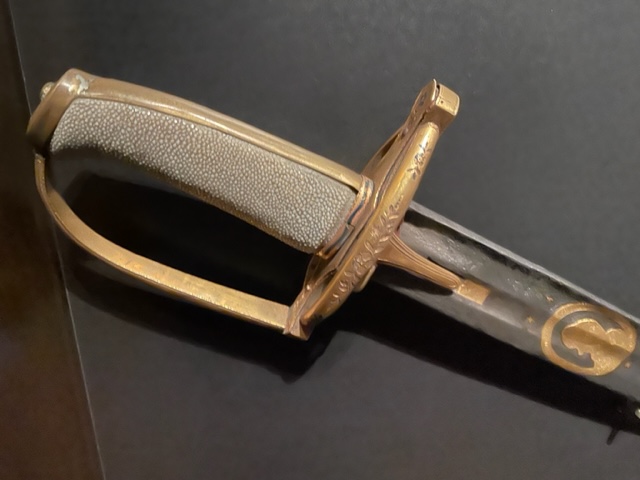
We have now come to a halt in our consideration of the military development of a Polish state in the 16th century. Some important mechanisms must now be mentioned. In 1569, the Union of Lublin was founded, which transformed the Grand Duchy of Lithuania and the Kingdom of Poland into a personal union. Military traditions from a million square kilometres were now combined into a single state, and we can only guess what this meant for the predominant types of edged weapons at the time. After the death of Sigismund II, the last Jagiellonian ruler, this first Polish-Lithuanian aristocratic republic became an elective monarchy. This meant fresh influences from other European countries. As a result, on 14 December 1575, Stefan Batory, a Transylvanian prince, was chosen as the husband of King Anna Jagiellonka (sic!), became king himself and Anna relinquished the title of king in favour of the title of queen. The aforementioned Stefan Batory carried out numerous reforms, including a massive strengthening of the armies and, above all, Hussaria. But not only that, because the prince also brought Hungarian foot troops and, together with them, a distinctive Hungarian sabre shape to the aristocratic republic, which marked the beginning of a sabre shape that would continue to exert influence into the first half of the 19th century (see illustration). This sabre shape is characterised above all by the almond-shaped and often downwardly curved pommel, which is wider than the actual hilt. This sabre shape now developed various attributes with a more or less constant handle shape in the sense of a shortening crossguard, then the break of the crossguard by 90 ° upwards to the so-called Polish L-shape (Polish jargon: ‘L-ka’), parallel to this with a chain between the crossguard and pommel, in order to finally obtain that striking crossguard in Poland at the end of the 17th century which heralded the beginning of the modern sabre and was to remain until the end of the military use of sabres. It should be noted here that the parrying guard was not a Polish invention per se, but can be seen impressively on Swiss sabres or rapiers from the 16th century and later became part of the so-called Walloon hilt at the same time as Polish sabres. The fact is that the simple parrying guard in combination with the Hungarian grip and European blade originated in the Polish-Lithuanian Union, however much the British would like to make an impression with the M1796 for having influenced the massive hussar sabres of Europe, one should at this point take up the cudgels in favour of the original developers and take a look at the accessible resources from the pre-Napoleonic period.
As already mentioned, in its heyday the noble republic of Poland-Lithuania covered around one million square kilometres, ultimately connecting not only the Kingdom of Poland and the Grand Duchy of Lithuania, but also encompassing territories from Courland to the Crimea. In this area, not every man (the author does not yet know anything about bare-armed women) who was anyone carried a sabre of the type described above, to repeat, with a Hungarian almond pommel. If we look at the contemporary iconography and compare it with exhibits from museums, we come to the conclusion that there were many more types of edged weapons. At this point, I could provide very long and detailed descriptions of the individual types in the time-honoured manner. Instead, I will provide only very brief definitions that anyone interested will find in the national museums of Krakow or Warsaw to provide some context.
First and foremost, the karabela sabre, or karabela, should be mentioned here once again. This sabre first appeared iconographically in its distinctive ‘bird of prey head handle shape’ around the year 1500. Early examples have handles with a design similar to long knives. This sabre shape remained the symbol of Polish nobility until the late 19th century and achieved cult status: ‘Bez Boga ani do proga, bez karabeli ani z pościeli’ (German, meaning: Without God not even to the front door, without Karabela not even out of bed”).
Sayings such as the last-mentioned recognise the unique position of the edged weapon in Polish culture right up to the present day. There is no shortage of other examples. For the sake of completeness, here is a nice example that is well known in both Poland and Hungary: Polak, Węgier, dwa bratanki, i do szabli, i do szklanki (Polish) / Lengyel, magyar – két jó barát, együtt harcol, s issza borát (Hungarian). In German this means singable (the beautiful rhyme is unfortunately lost): ‘Pole, Hungarian, two brothers, both by the sabre and glass.’
You can see that the edged weapon, and specifically the sabre, is anchored in society. Now we can draw the line and realise that this is due to the fact that members of the nobility were represented from the lowest to the highest levels of society before the Polish partitions. For the study of edged weapons, this knowledge has the enormous advantage over the naive that one is now somewhat better able to understand individual exhibits in the context of their time. Leafing through museum catalogues, one often gets the impression that a edged weapon in 17th or 18th century Poland-Hungary must have been utterly magnificent. In reality, there were as many gradations in the quality and individuality of Polish edged weapons as there were noblemen (i.e. an estimated 10-15% of the total population). There is no one type of Polish sabre. Many sabres were made and assembled to private order. There can therefore be no standards, and anyone who rejects a blank weapon with the argument (believing it to be a copy/counterfeit) that individual elements do not conform to the standard has simply not understood the subject. This should be analysed in advance of the actual chronology.
The Poland-Lithuania construct remained an elective monarchy until the end of its existence. This turned out to be a disadvantage when the Saxon Wettin Frederick Augustus I militarily overthrew the favourite François Louis de Bourbon in 1697 and had himself proclaimed king as ‘Augustus II’. This was followed by turbulent social times in which much also changed militarily and Poland’s crown army was reformed from the formation that broke through the second Turkish siege of Vienna to a clone that corresponded to other European armies. At this point I would like to add a special treat for auctioneers: The Flügelzischägge is Polish and dates from the first half of the 18th century and not earlier. It is an invention from the time of the Wettins in Poland, presumably introduced as compensation for the loss of other feather decorations (e.g. hussar wings, without further discussion), depending on the source.
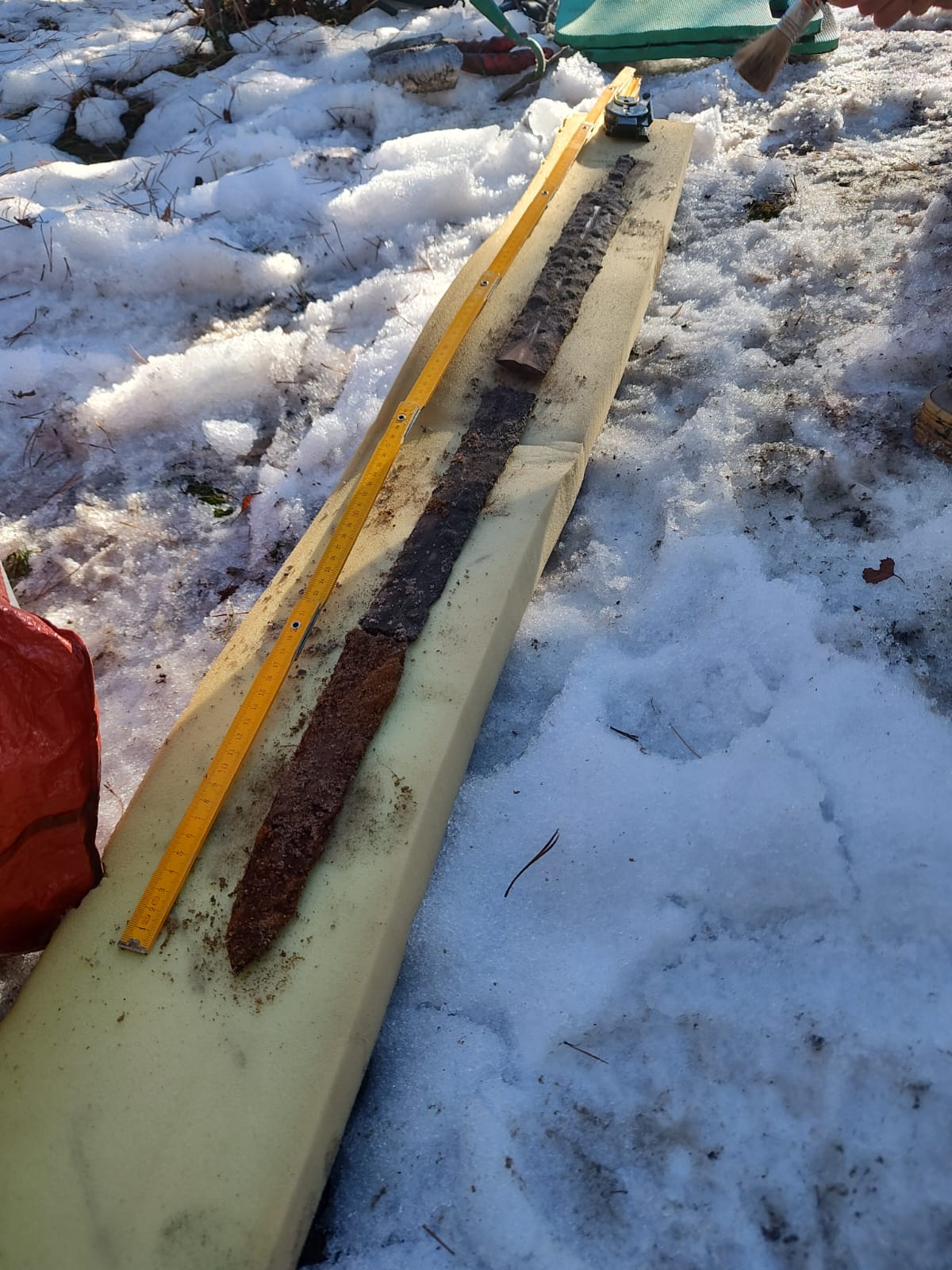
The first Polish Republic (Polish-Lithuanian Union) was divided three times between Prussia, Habsburg and Russia: in 1772, 1793 and 1795. At this point, the author would like to make a sarcastic side note concerning the Polish relief army at Vienna in 1683 and the Habsburg revenge in participating in the partitions. Until the end of the First Republic, edged weapons were manufactured in the national style. The author himself is only aware of one regulation model (of a pallash) up to the last partition, and it is very likely that others have not yet been discovered in the archives, unless the documents have been lost due to war or occupation. Before going further into the types of edged weapons between 1500 and 1795, it is useful to examine the keywords partition and occupation in the context of Polish edged weapons, as this is relevant for the researcher and collector. Polish edged weapons are much rarer than those of many other European nations, such as the German states, France, Britain, etc. . This is due to the fact that the occupying powers ordered laws to disarm both the civilian population and military personnel. Anyone found to be in possession of weapons was threatened with draconian punishments. This was particularly the case in the Prussian and Russian occupation zones. It should be mentioned here that the Habsburgs permitted traditional edged weapons as part of the national costume. The above descriptions play an enormously important role for the stock of Polish edged weapons today. Everything that has been handed down to us comes either from 1. high aristocratic estates for which exceptions applied, 2. the Habsburg occupation zone, 3. from hidden depots or 4. from the Polish diaspora (Polonia). That is a very drastic selection! They do exist, the pieces that accidentally hung over the fireplace on old Polish or old Lithuanian properties until a Soviet or SS officer took them as ‘souvenirs’ and which circulate in collectors’ circles today, but the majority were destroyed. You can certainly find pieces with earth material in the rivet holes or grooves that were hidden in cellars or window frames. However, it is important to realise that the basis for the existence of Polish edged weapons before 1800 is very different to that of edged weapons from other nations. This gives you a rough idea of how many times more often a Prussian or French edged weapon will come onto the market than a Polish one (caveat emptor!).
Blank weapons in Polish use that followed were Prussian, Russian and Habsburg types and their Polish modifications with stamps matching troops stationed on the former territory of Poland-Lithuania, e.g. in Danzig, Posen, Krakow or Warsaw. Later, during some uprisings (e.g. November Uprising 1830/31 or January Uprising 1863/64) all kinds of blank weapon types were secretly imported, this mainly concerned Prussian and French models from the first half of the 19th century (e.g.: P1796 LCS, M 1811 ‘Blücher’, M1848 artillery, AN IX, AN XI Polish modified, KuK 1836 infantry sabre and many more). IX, AN XI Polish modified, KuK 1836 infantry sabre and many more).
Now that the framework for the first one has been established – leaving aside the Polish edged weapons of the 20th century – we can go into more detail. As already mentioned, there was a flourishing aristocratic culture that encompassed all social classes and was subject to both fashionable and pragmatic influences. On the one hand, Kombatants brought influences from other cultures with them from campaigns; in the 17th century, these were predominantly Eastern influences. People migrated, diplomats returned from longer stays and cities such as Lwów (now Lwiw in the Ukraine) gained significant influence in terms of coveted imported goods, including precious armour for edged weapons made by Armenian craftsmen there. The influence of Armenian production is still reflected today in the shape of the sabre known as the ‘Ormianka’.
Powerful magnate families exerted great influence over large areas and so it is not surprising that the courtly culture and certain types of conjugated edged weapons were coveted throughout the region. One example of this are the massive basket sabres which were distributed by Lithuanian noble courts, not least thanks to the Radziwill’s allegiance, and the mere wielding of such a weapon left no doubt as to the political convictions and sympathies of the bearer (see picture). In its heyday, Poland-Lithuania stretched from the Baltic Sea to the Crimea. Countless ethnic groups were represented in such an area and often had their own influences on regional and supra-regional types of edged weapons. Thus, due to the great influence of German culture, one could certainly see more rapiers and swords on the streets of Gdansk in the 17th century than in Kiev at the same time, which had completely different influences. People have always exchanged information and goods and so certain types of edged weapons spread secondarily in previously foreign circles. One example of this is the well-known Batory blades made in Gdansk. Last but not least, the current elected monarch exerted an immense influence on cultural life, especially in Krakow and Warsaw.
In addition to the aforementioned Hungarian Batory and the two Saxons, Sigismund III Vasa, a Swede who ruled at the beginning of the 17th century, and Jan III Sobieski, a Pole at the end of the 17th century, are the monarchs with the supposedly greatest influence on warfare and fashion and thus also on edged weapons. The first Vasa monarch refreshed the hitherto Batorian, Hungarian influence with Western European aspects (including weapons), whereas Sobieski ruled in an era of Sarmatism. With its loud, life-affirming and wild nature, Sarmatism was to forever distinguish the Polish nobility from the rest of the European aristocracy. At a time when neighbouring German states were rediscovering their connection to the Romans and France to the Celts and legitimising their own position, the Sarmatians were chosen as protoplasts in Poland-Lithuania. As a result, it is no longer surprising that these lords also rode into battle with ‘Sarmatian’ armour (as it was imagined at the time), specifically armoured in caracenas, which had been out of use since antiquity. The National Museum in Krakow at Wawel Castle has some of these suits of armour in its inventory.
It is time to put the spotlight on some terms and to consolidate them with some background knowledge. You should be aware that today’s terminology, both German and Polish, has nothing in common with the terminology used in the early modern period. For example, ‘sabre’, ‘cord’ and ‘pallash’ were used interchangeably. ‘Karabela’ used to stand for an expensively decorated sabre rather than the griffin-head grip that is obligatory today. The term ‘the crooked pallash’ was also used to refer to a hussar sabre. There were no regulations on the latter, so it was not possible to speak of ‘the hussar sabre’ or similar. Nowadays there is a more or less valid consensus which I will possibly present elsewhere with the background of visual material. At this point I will only say that a sabre with a knucklebow could just as easily be wielded by a hussar as one with a straight crossguard, possibly with a chain.


Leave a Reply